Clinical Services
All treatments are preceded by appropriate assessment. In many cases, more than one concern can be addressed within a single appointment, depending on the time available.
Routine Foot Care
Management of common nail and skin conditions, delivered with careful assessment and clear aftercare advice

General Podiatry Care
General podiatry care focusses on the assessment and management of common nail and skin conditions affecting the feet. Treatment includes nail cutting and reduction, management of thickened or fungal nails, treatment of corns and callus, and advice on maintaining skin integrity. Each appointment begins with an appropriate clinical assessment to ensure treatment is safe and suitable. Where necessary, guidance is provided regarding ongoing care, footwear considerations and prevention of recurrence.

Ingrown Toenail Treatments (Conservative)
Ingrown toenails are common and can be extremely painful. Many people worry that treatment automatically means injections and surgery - but in most cases, that isn't necessary. If the problem is caught early, the painful piece of nail can often be carefully removed during a routine appointment, without local anaesthetic and with minimal discomfort. Relief is usually immediate.
This conservative treatment involves careful assessment of the toe, gentle removal of the offending nail section, clearing of the nail edge using a liquid antiseptic, and packing to cushion the side of the nail. Most patients are surprised at how straightforward the treatment is. The aim is to relieve pain quickly and allow the toe to settle naturally.
If a nail repeatedly grows in, or if the problem is severe, nail surgery may be recommended. This involves a local anaesthetic, removal of a section of nail, and a chemical to prevent it from regrowing. If you're unsure, it's always better to have the toe assessed. Early treatment is simpler, more comfortable, and can prevent the need for more involved procedures later.

Verruca Treatments
Verrucae (plantar warts) are assessed to confirm diagnosis and to determine the most appropriate options for you. Where treatment is indicated, options may include cryotherapy or topical chemical applications administered within the clinic. The choice of treatment depends on factors such as size, location, duration, and patient preference. Clear guidance is provided regarding expected response and the potential need for repeat applications.

Toenail Disorders and Infections
Changes to the toenails are common and may develop gradually or follow an injury. Thickening, discolouration, crumbling, lifting from the nail bed, or changes in shape can result from infection, repeated pressure from footwear, trauma, or underlying skin conditions. Some nail changes are primarily cosmetic, while other may cause discomfort or indicate a more significant issue.
During your appointment, the nails are carefully assessed to determine the most likely cause of the change. Management may include reduction of thickened nails, advice regarding topical or medical treatment, pressure modification, monitoring or referral where appropriate.
Bleeding or darkening beneath the nail can occur after trauma, but similar changes may occasionally arise from other causes. Careful clinical assessment helps distinguish between these possibilities and ensures that any concerning features are identified promptly.
Skin Disorders and Infections
Skin problems affecting the feet are very common, and many develop gradually without obvious symptoms. Changes such as dryness, scaling, redness, small splits or persistent irritation are often dismissed as minor issues. However, they may represent underlying inflammatory or infectious conditions that benefit from targeted treatment.
As part of your appointment, the skin of the feet is routinely assessed. Subtle changes are often identified before they become more difficult to manage. Early identification allows for simpler management and helps prevent ongoing discomfort or recurrence. Some skin conditions will benefit from changes in your routine, and in this case, advice will be provided.

Custom Devices to Alleviate Forefoot Pain
Forefoot pain is often caused by pressure and friction between the toes, on the tips of the toes, or beneath the ball of the foot. In some cases, a small, custom-made silicone device can significantly reduce discomfort. These are soft, flexible supports that are moulded directly to your toes during the appointment, ensuring a precise and comfortable fit.
They can help with reducing pressure on corns, slowing the recurrence of corns, protecting painful toe tips, redistributing pressure away from tender areas and improving comfort in footwear. Because each device is individually moulded to your foot, it is designed to sit securely and discreetly inside your shoe.
Health and Risk Assessments
Structured assessments aimed at identifying risk factors affecting long-term foot health

Diabetic Foot Assessment
People living with diabetes are at increased risk of nerve damage, reduced circulation and delayed wound healing. A structured foot assessment allows early identification of risk factors and helps prevent serious complications such as ulceration and infection.
This assessment provides a comprehensive evaluation of your neurological and vascular foot health, alongside a detailed clinical history. You will be asked about your most recent HbA1c (if known), your kidney function, any previous foot ulcers and any symptoms of neuropathy (burning, tingling or numbness).
To assess protective sensation, a 10g monofilament is applied to specific areas of the foot. Inability to feel the filament at key sites may indicate loss of protective sensation.
Circulation is assessed by feeling (palpating) the posterior tibial and dorsalis pedis pulses. Capillary refill is also checked, along with other observations such as skin colour and temperature.
Your feet will be examined for deformity, pressure areas, callus formation, nail changes, breaks in the skin and signs of infection. Following assessment, your risk level will be explained clearly and you will be given written advice, a recommended review period and referral if necessary. Early identification and regular monitoring are key to preventing avoidable complications.
Basic neurological and vascular checks form part of all comprehensive foot assessments. A dedicated diabetic review provides more detailed risk stratification and structured monitoring.

Vascular Health Assessment
Peripheral arterial disease can develop gradually and may not always cause obvious symptoms in the early stages. Objective vascular testing can help to identify early circulatory changes and is suitable for individuals wishing to better understand their lower limb arterial health.
This assessment may be particularly appropriate for those with diabetes, a history of smoking, leg pain on walking, reduced pulses, or wounds that are slow to heal.
To calculate your Ankle Brachial Pressure Index (ABPI) and Toe Pressure Index (TPI), blood pressure cuffs are placed around both arms, both ankles and a small cuff around each big toe. Doppler ultrasound is used to obtain accurate pressure readings.
This is a dedicated vascular assessment using Doppler ultrasound and pressure index measurement to obtain objective, reproducible data on arterial blood flow. Your ankle and toe pressure indices will be calculated during the appointment. Results falling outside the normal range will be clearly explained and, where appropriate, a referral will be made.

Mole Assessment
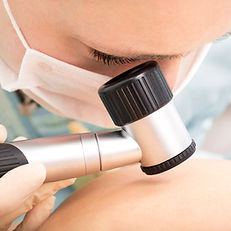
Changes in moles or new pigmented lesions can understandably cause concern. This appointment provides a structured clinical assessment of skin and nail lesions using dermoscopy.
Dermoscopy allows magnified examination of pigment patterns and vascular structures not visible to the naked eye. This improves the accuracy of clinical assessment and helps differentiate between benign changes and lesions that may require further investigation. Assessment may be appropriate for changing or irregular moles, new pigmented lesions, nail pigmentation or streaking or areas of concern.
Many pigmented nail changes are related to trauma or benign causes. However, where features are atypical, appropriate referral pathways will be initiated.
Nail Surgery
Minor surgical management of persistent or recurrent ingrowing toenails, performed under local anaesthetic with structured follow-up care.

Nail Surgery
Persistent or recurrent ingowing toenails can be painful and frustrating. When conservative treatment is no longer effective, minor nail surgery offers a reliable, long-term solution.
The procedure is carried out under local anaesthetic to ensure the toe is fully numb before treatment begins. The problematic portion of nail is carefully removed, and the corresponding section of the nail matrix (the part responsible for nail growth) is treated to prevent regrowth of that edge.
In some cases, removal of the entire nail is recommended. This may be appropriate where the nail is already very narrow, significantly distorted, or where preserving a small remaining section would not provide a comfortable or cosmetically acceptable result. The most suitable approach will always be discussed with you beforehand.
The procedure is straigntforward and typically takes less than 45 minutes. Clear aftercare guidance is provided, and most patients return to normal daily activities the following day.
Nail surgery is a well established and commonly performed procedure, with high success rates when aftercare advice is followed.
Biomechanical Assessment & Orthotic Therapy
Assessment and management of foot and lower limb pain and musculoskeletal problems.

Biomechanical Assessment
Biomechanical assessment is intended for people experiencing foot or lower limb pain, recurring symptoms or a problem affecting walking or activity. The aim is to investigate the factors that may be contributing to your particular problem.
The appointment includes a detailed history of your symptoms and assessment of the feet and lower limbs in both sitting and standing positions. Foot posture, alignment and load distribution are assessed, as well as joint range of movement, muscle strength and flexibility. Your walking pattern may also be assessed where relevant.
Findings are used to form a working diagnosis and guide management. Where mechanical factors appear to be contributing to your symptoms, temporary in-shoe modifications or trial orthoses may be used to assess your response to altered load distribution.
If symptoms improve with this structured trial approach, more permanent orthotic devices may be prescribed where appropriate.
Management may also include footwear advice, targeted exercises and activity modification.

Foam Casting for Orthotics
Foam casting provides a three-dimensional impression of the foot in a corrected position. This helps capture foot shape and alignment as part of the orthotic prescription process.
The cast is sent to the laboratory along with a detailed clinical prescription based on your biomechanical assessment. Orthoses (commonly referred to as orthotics) are manufactured using both the physical impression and the specific functional corrections required.
This ensures the device is tailored not only to the shape of your foot, but also to the mechanical factors identified during assessment.

Orthotics
Foot orthoses are designed to improve load distribution, support lower limb mechanics and reduce strain on symptomatic tissues.
Following biomechanical assessment, the most appropriate device will be recommended based on your diagnosis, activity level and clinical findings.
Options may include:
-
Prefabricated orthoses, which can be customised and odified in clinic to provide targeted mechanical support.
-
Heat-mouldable orthoses, allowing further adjustment to foot shape and function.
-
Prescription orthoses, manufactured from a three-dimensional cast and detailed clinical prescription where more specific correction is required.
A staged approach is often appropriate, beginning with adjustable devices and progressing to fully bespoke orthoses where indicated. The choice of device is guided by clinical findings rather than a one-size-fits-all approach.